
Shortened URL
Original URL
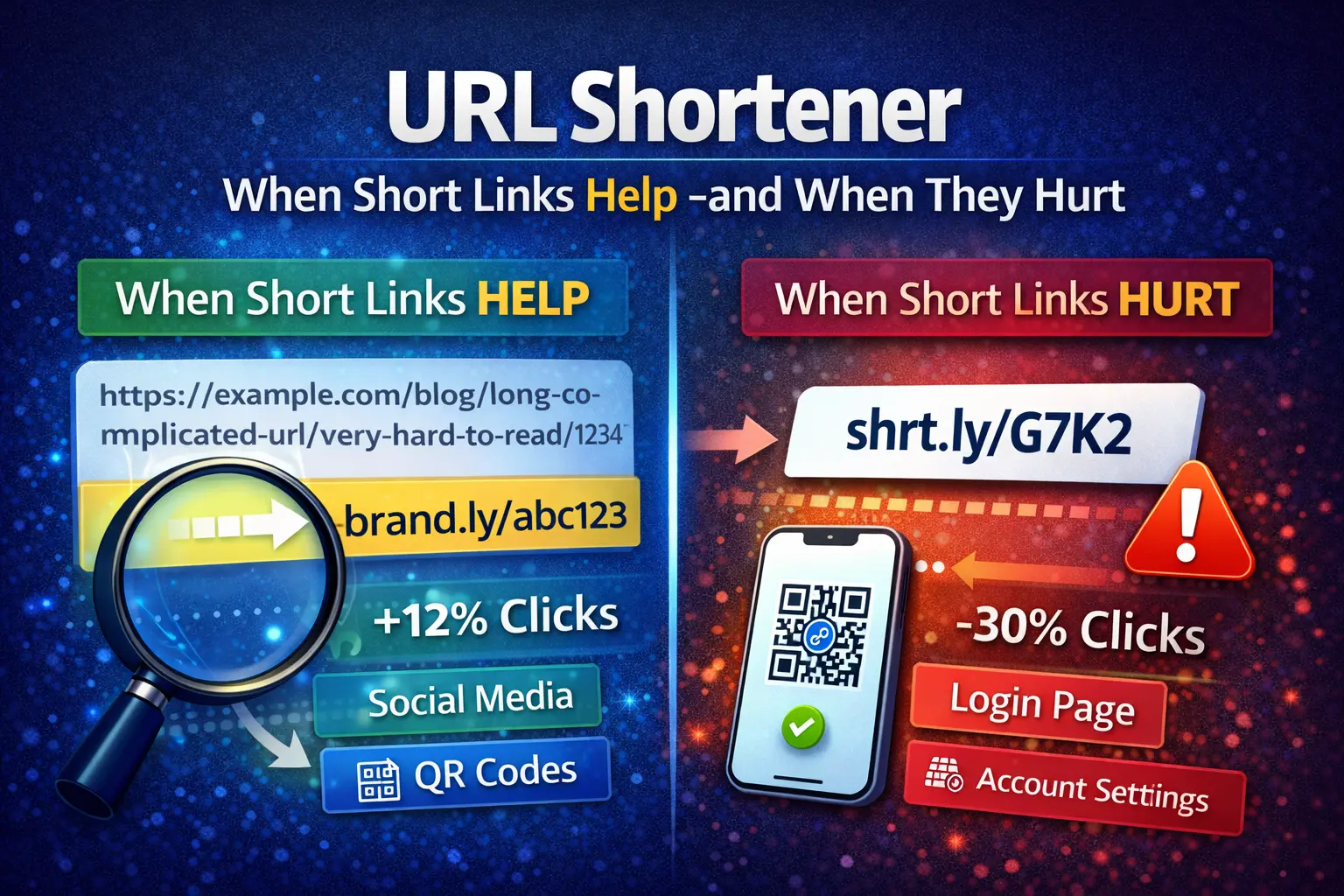
URL Shortener: When Short Links Help—and When They Hurt
You paste a long link into a message.
It breaks the layout.
It looks messy.
It feels untrustworthy.
So you reach for a URL shortener.
That instinct is right. But it is only half the story.
Short links solve real problems. They also create new ones if used blindly. This guide focuses on decision-making, not definitions. You will learn when a URL shortener helps, when it backfires, and how to use one without losing trust.
The Real Problem URL Shorteners Solve
Long links cause friction.
People hesitate to click them because:
- They look spammy
- They wrap across lines
- They hide context
- They feel unsafe
A URL shortener reduces that friction fast. It makes links easier to share, read, and remember.
But shortening a link does not automatically make it better.
The Hidden Cost of Short Links
Here is the trade-off most articles skip.
A short link hides the destination.
That creates uncertainty.
When users cannot see where a link goes, they pause. On sensitive pages, that pause kills clicks.
This is why short links work great in some places and fail in others.
Where a URL Shortener Works Best
Short links shine in low-trust, low-context spaces.
Examples:
- Social media posts
- SMS messages
- QR codes
- Printed materials
- Offline ads
In these cases, users expect short links. The format feels normal.
Where a URL Shortener Often Fails
Short links struggle in high-trust moments.
Be careful when linking:
- Login pages
- Payment pages
- Account settings
- Legal or policy pages
In these cases, users want to see the real domain. Hiding it raises suspicion.
Branded Short Links Change the Game
This is where many people get stuck.
Generic short links look anonymous.
Branded short links look intentional.
Compare these two:
bit.ly/3GxK2yourbrand.link/signup
The second one feels safer. It also reinforces your name every time someone clicks.
From real campaigns, branded links consistently get higher clicks in emails and ads.
What a URL Shortener Actually Does Behind the Scenes
A URL shortener stores your long link on its server.
When someone clicks the short link:
- The server receives the request
- It redirects the user
- The browser loads the original page
Good shorteners use fast redirects. Users never notice the delay.
URL Shortener and SEO: The Practical Truth
Short links do not improve rankings.
But they help in indirect ways:
- Better click-through rates
- Cleaner sharing on social platforms
- Easier campaign tracking
As long as the redirect is done correctly, search engines follow it without issues.
A Simple Rule for Choosing Short or Long Links
Use this mental check.
Ask one question:
Does the user need to trust this link immediately?
- If yes, show the full domain
- If no, a short link is fine
This rule prevents most mistakes.
A Real Example From Everyday Use
A newsletter sends traffic to a blog post.
With a short link, clicks drop.
Readers do not recognize the destination.
They switch to a branded short link.
Clicks recover.
Nothing else changes.
Trust does the work.
Common URL Shortener Mistakes Worth Avoiding
These mistakes show up again and again.
- Using random free tools for important links
- Letting links expire without notice
- Shortening links that are already clean
- Hiding links users need to verify
- Forgetting to test links before publishing
Each mistake costs trust.
Free vs Paid URL Shorteners: A Practical View
Most people start with free tools. That is fine.
Paid tools matter when:
- You need branded domains
- You want reliable analytics
- Links support real business goals
- Teams share link management
Choose based on impact, not features.
Internal Linking Suggestions
If this article lives on your site, link it to:
- A QR code generator guide (anchor: “QR code generator”)
- A link tracking basics article (anchor: “track link clicks”)
- A digital marketing fundamentals page (anchor: “digital marketing basics”)
These links support topic depth.
Trusted External References
For accuracy and trust, link to:
- Web redirect standards (HTTP status codes)
- Browser security documentation
- Email deliverability best practices
Avoid low-quality SEO blogs.
Final Take
A URL shortener is not just a convenience tool.
It is a trust decision.
Used in the right place, it improves clicks and clarity. Used carelessly, it raises doubts and loses users.
Shorten links with intent.
Show the destination when trust matters.
Use branding when links represent you.
That is how short links actually help.