
Body Fat Calculator
Fat Categories
| Category | Body Fat % (Male) | Body Fat % (Female) |
|---|---|---|
| Essential Fat | 2–5% | 10–13% |
| Athletes | 6–13% | 14–20% |
| Fitness | 14–17% | 21–24% |
| Average | 18–24% | 25–31% |
| Obese | 25%+ | 32%+ |
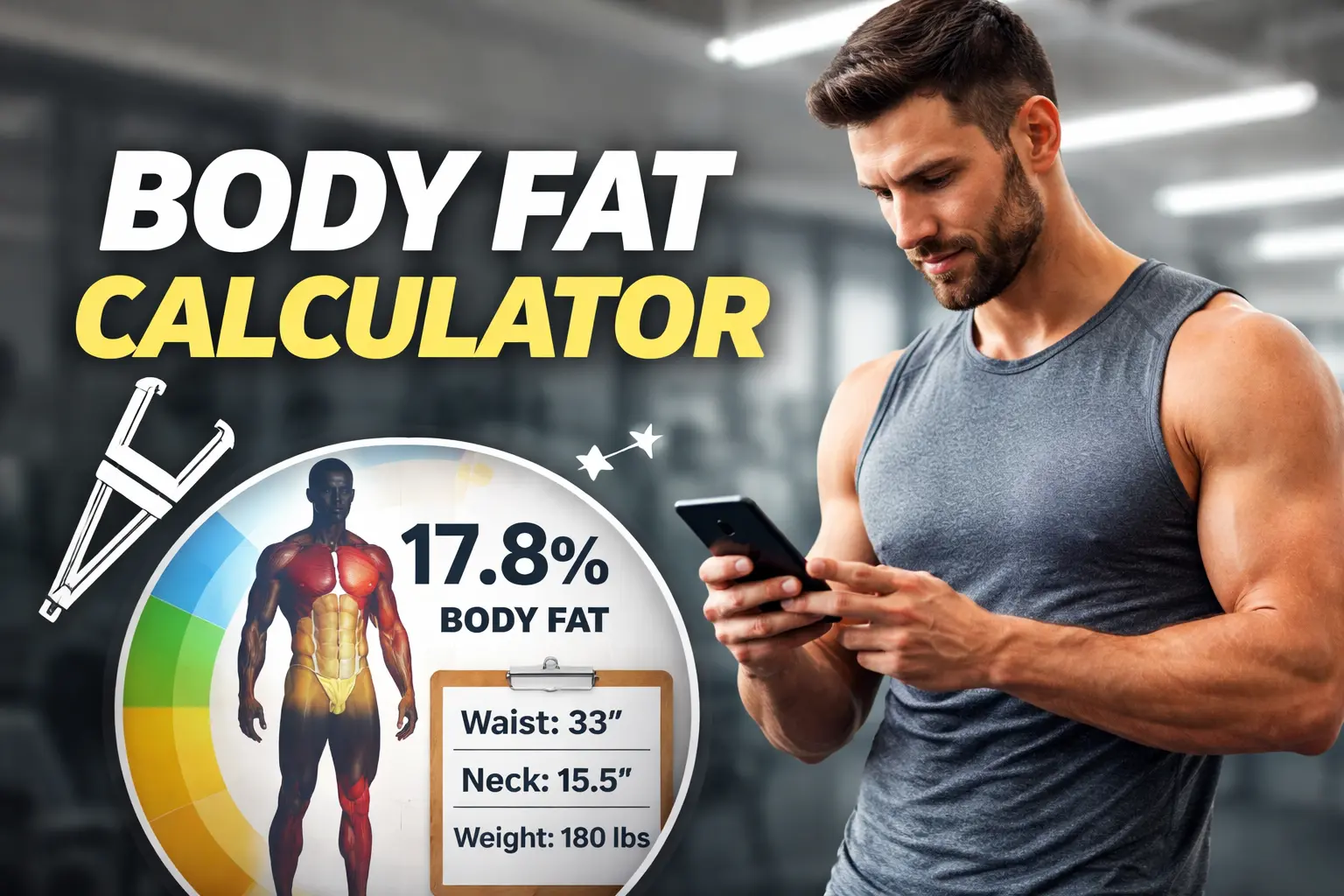
Body Fat Calculator: a practical way to understand your body, not just your weight


Why body fat percentage tells a clearer story than weight
Most people track weight. Fewer understand what that weight is made of. That gap is exactly where a body fat calculator becomes useful. Not as a fitness gimmick, but as a decision tool. It helps you answer questions weight alone never can. Are you losing fat or just water? Is muscle gain hiding fat loss?Is your current routine actually working? This guide is built around real use, not theory. Think of it as a calculator-driven explanation, focused on everyday decisions.
Why body fat percentage matters more than the scale
Two people can weigh the same and look completely different. That difference usually comes down to body fat percentage.
Body fat percentage tells you how much of your body is fat versus lean mass like muscle, bone, and organs.
Here is why it matters in daily life:
- Fat loss progress shows up earlier than scale changes
- Health risk correlates more strongly with fat percentage than weight
- Strength training results make more sense when muscle is accounted for
- Diet adjustments become clearer and more targeted
A body fat calculator gives context. Weight alone gives noise.
What a body fat calculator actually calculates
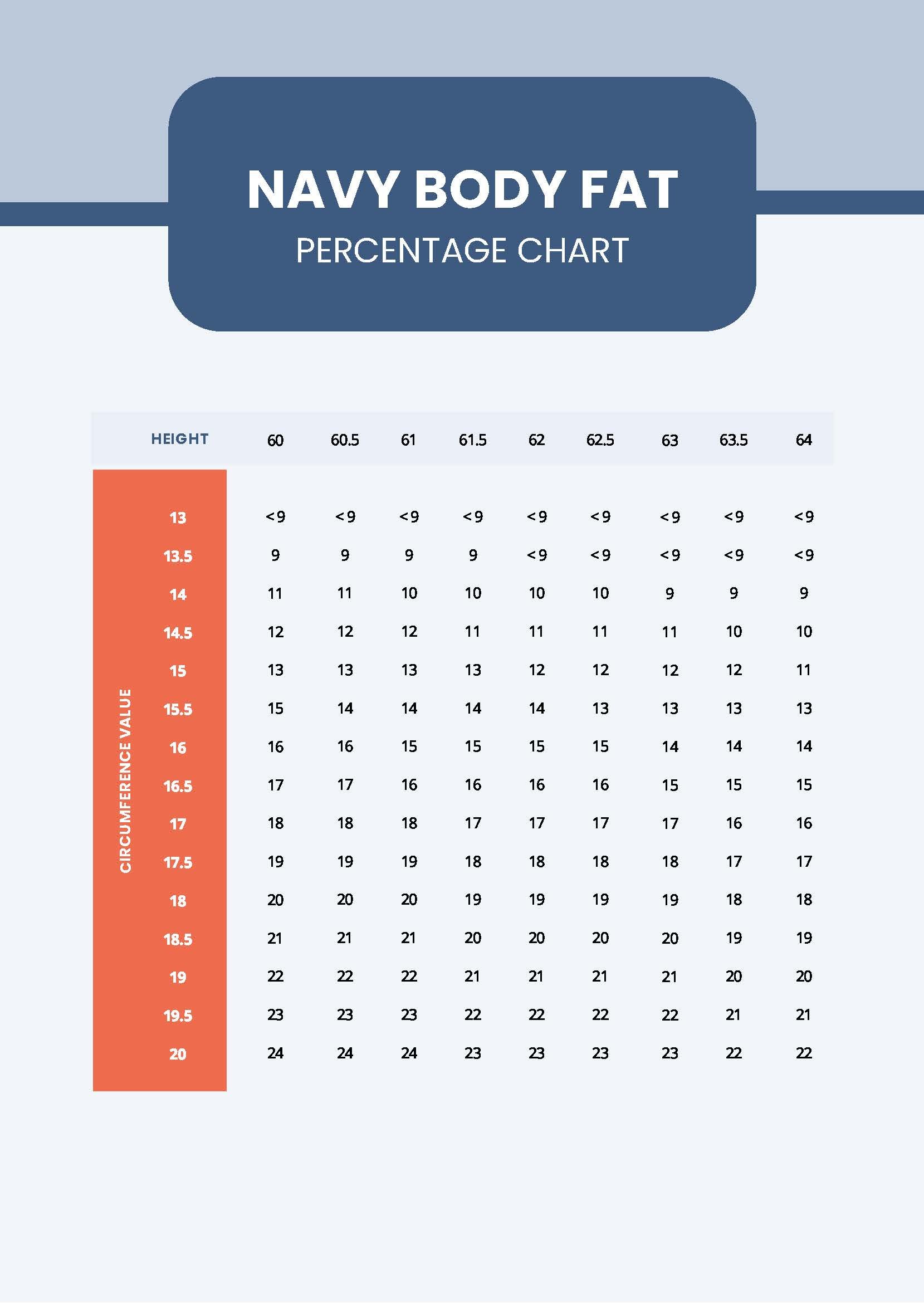
Measurements commonly used in body fat calculators


Most online body fat calculators do not guess randomly. They use validated formulas based on body measurements.
The most common method is the U.S. Navy formula. It estimates body fat using circumference measurements, not BMI.
Typical inputs include:
- Height
- Waist circumference
- Neck circumference
- Hip circumference for women
The calculator then estimates body fat percentage based on how fat distributes across the body.
It is not perfect. But when used consistently, it is very effective for tracking trends.
How accurate is a body fat calculator, really
This is where many articles oversimplify. Accuracy depends on how you use it, not just the formula.
A body fat calculator is:
- Less accurate than a DEXA scan
- More accurate than BMI
- Very reliable for progress tracking
The biggest error comes from inconsistent measuring.
If you measure waist loosely one week and tightly the next, the calculator will lie to you. The math is fine. The input is not.
Best practice:
- Measure at the same time of day
- Use the same tape measure
- Stand relaxed, not flexed
- Record numbers before calculating
Do this, and the trend line becomes trustworthy.
Real-world example: why the calculator changes decisions

Same weight, different body fat outcomes
Imagine this scenario.
You weigh 72 kg for three weeks straight. The scale does not move. Motivation drops.
The body fat calculator tells a different story:
- Week 1: 26.5%
- Week 3: 24.9%
That is real fat loss. Muscle gain or water retention is masking it on the scale.
Without the calculator, many people would cut calories harder or quit. With it, they stay consistent.
That is the real value.
Common mistakes people make with body fat calculators
Most disappointment comes from misuse, not the tool itself.
Measuring in the wrong place
Waist measurements should be taken at the narrowest point or just above the navel, consistently.
Obsessing over single readings
Daily fluctuations are normal. Weekly or biweekly averages matter more.
Comparing different tools
Do not switch between calculators or methods. Pick one and stick with it.
Treating the number as absolute truth
The percentage is an estimate. The direction of change is what matters.
Body fat ranges that actually make sense

Practical body fat ranges for men and women


Instead of chasing an unrealistic number, use ranges.
Typical healthy ranges
Men
- Athletic: 10–14%
- Fit: 15–19%
- Average: 20–24%
Women
- Athletic: 18–22%
- Fit: 23–27%
- Average: 28–32%
Lower is not always better. Hormones, energy levels, and sustainability matter.
A body fat calculator helps you stay in a range that supports real life, not just photos.
When a body fat calculator is most useful
This tool shines in specific situations:
- Strength training or recomposition goals
- Fat loss without scale changes
- Plateau troubleshooting
- Long-term health monitoring
It is less useful if:
- You measure inconsistently
- You check it daily
- You use it only to compare with others
Used correctly, it becomes a feedback system, not a judgment.
A simple routine that actually works
Here is a realistic way to use a body fat calculator:
- Measure once every 7 to 14 days
- Record raw measurements, not just the percentage
- Track alongside weight and photos
- Look for trends over 4 to 6 weeks
This takes less than five minutes. The insight lasts much longer.
A body fat calculator is not about chasing perfection. It is about clarity.
When you understand what your body is doing beneath the scale, better decisions follow naturally. That is what makes this tool worth using.